Wholesale Humidifiers for Uzbekistan
A humidifier used at night is normally placed on a bedside table or in a corner of the room. Sound at the lowest setting, indicator brightness, behaviour when the tank is empty and ease of refilling matter more than maximum mist output. A tank that is too small needs frequent refilling, while an oversized tank adds cleaning work and occupies more space.
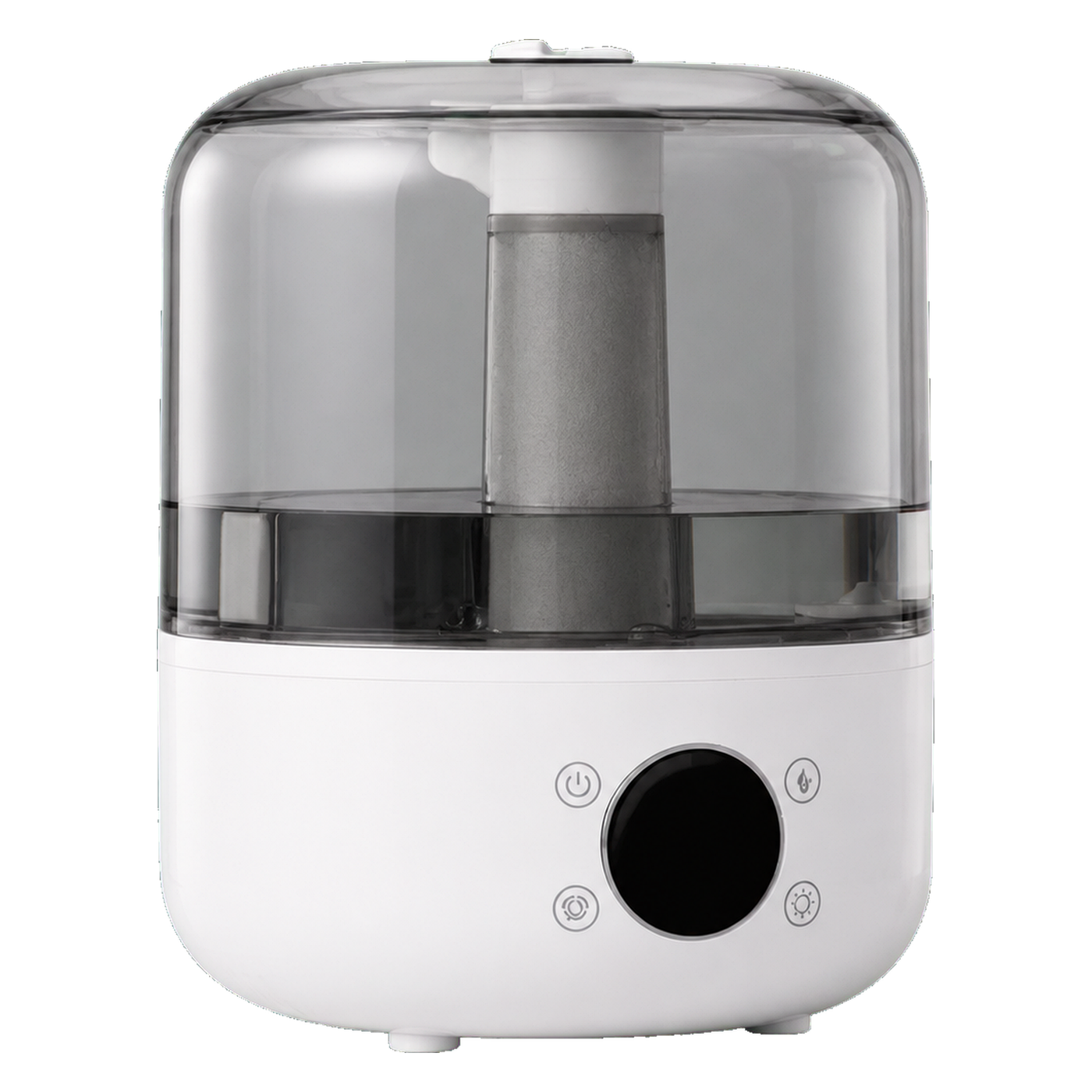
Run the sample continuously in a quiet room and listen for water movement, fan noise and control alerts. Check whether the mist outlet can be directed, whether droplets settle on a nearby surface and whether the tank drips when it is removed. On models with a night light, aroma function or timer, determine whether each function can be controlled independently.
Long operating periods mean that refilling, draining and cleaning will be repeated regularly. A large tank with a narrow opening can be difficult for staff to wipe thoroughly. A top-fill design makes replenishment easier, but it must still provide a practical way to remove residual water. Whether the tank, cover, mist tube and float can be removed determines much of the routine maintenance cost.
Commercial use also introduces the risk of incorrect operation. An overly complicated panel or an unpredictable restart state after a power interruption can add to management work. A unit intended to be moved should have its handle, casters and stability checked with a full tank, not judged only by its empty weight.
An ultrasonic humidifier turns water into a fine mist. Minerals in the water may travel with that mist and leave white deposits on furniture or around the product. Scale may also collect on the atomising plate and tank. Product instructions, channel training and cleaning guidance should address water quality directly instead of treating every reduction in mist as a product fault.
A filter or water-treatment cartridge may improve the experience under particular conditions, but it creates a continuing consumables requirement. Importers need to consider whether replacements will remain available locally and whether consumers can understand the replacement interval. If supply is uncertain, a simple structure that is easy to wash may be more appropriate for mass-market channels.
A single power-on test shows whether mist is produced, but not whether deposits, odour, residual water or inaccessible areas will become a problem. Use the same local water for several days and record refilling frequency, operating sound, moisture on nearby surfaces, water left in the tank and the time needed for cleaning. This is closer to the consumer’s actual experience.
At the end of the test, dismantle every part the user is permitted to clean. Check whether a hand can reach the tank walls, whether corners retain water, whether the area around the atomising plate can be wiped and whether dried parts can be reassembled smoothly. If seals, floats or small caps are easily lost, consider captive designs or a realistic spare-parts plan.