Evaporative Air Coolers for Central Asia
When air is hot and dry, water can evaporate more readily and supply-air temperature may fall. As relative humidity rises, evaporative potential decreases. Closing doors and windows allows indoor humidity to accumulate, so the product generally requires fresh air to enter and moist air to leave.
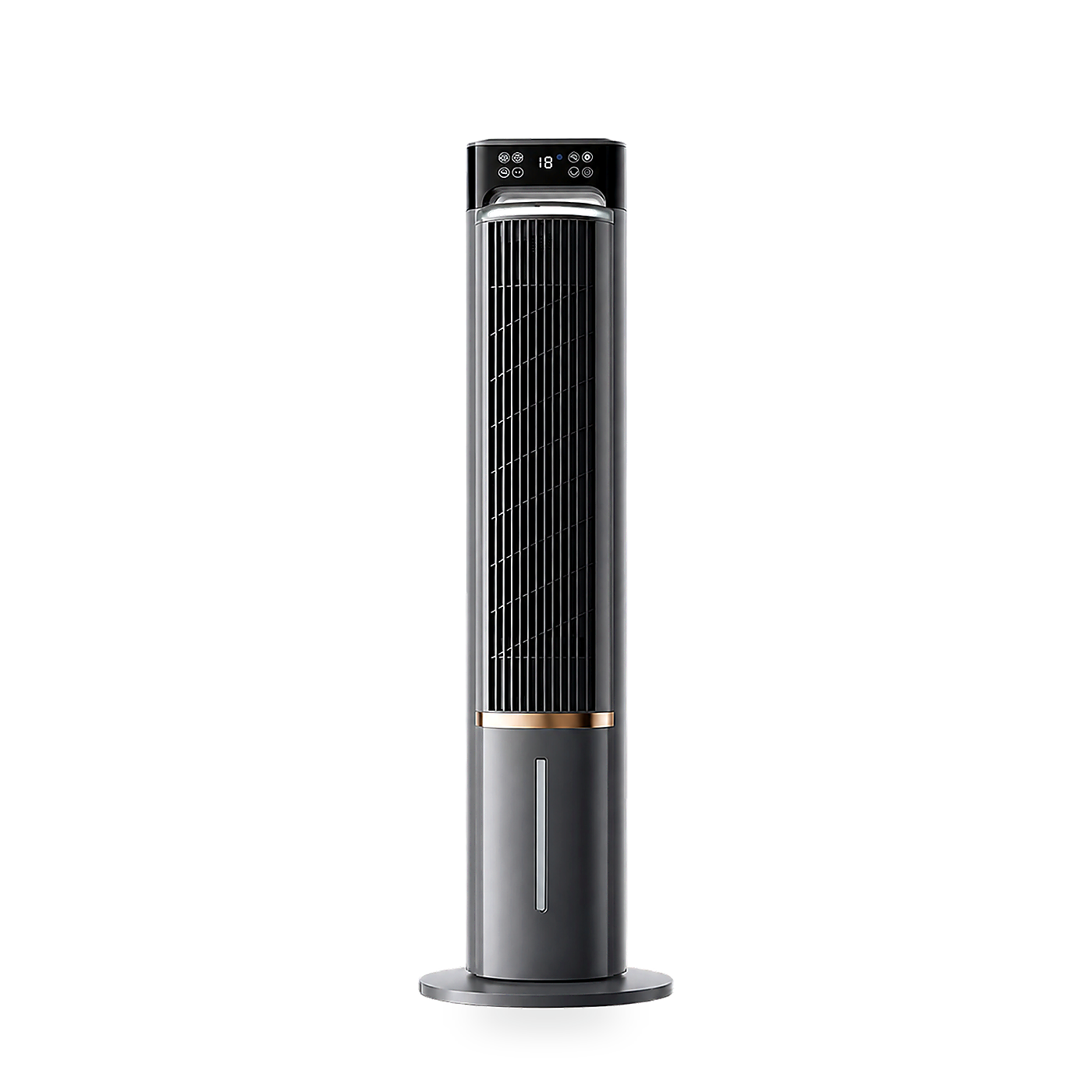
Review temperature and humidity for the target city, season and hours of use rather than assuming that all of Central Asia is dry. Homes, shops, restaurant terraces, warehouses and semi-open work areas have different ventilation. A demonstration showing a brief temperature change beside the outlet is difficult to interpret without inlet humidity, distance and running time.
Airflow supports air exchange, but a higher nominal figure does not automatically mean more cooling. Air must pass reasonably evenly through an effectively wetted pad. Poor water distribution, dry areas or bypass leakage wastes evaporative surface regardless of headline airflow.
Compare samples in dry-fan and water modes, observing airflow, input power, sound and outlet condition. Record inlet and outlet temperature and humidity, distance, speed and stabilisation time. Consistent test conditions separate structural performance from weather variation.
A large tank reduces filling frequency but increases product size, full-water weight, cleaning area and water residence time. The user's ability to remove the tank, drain it fully, reach the bottom and reinstall it often matters more to long-term use than nominal litres.
The water level should be readable from a normal position. Low-water control should stop or protect the pump when needed without necessarily disabling fan-only operation. Filling and drain openings and tank edges should avoid inaccessible areas that retain residue.
A cooling pad must absorb water, retain its structure and allow air through. Excess density increases resistance, while insufficient density or uneven wetting reduces useful evaporation. Assessment should cover dimensions, installation, water distribution, removal, cleaning and replacement supply—not the material name alone.
Pump flow, head, sound, durability and dry-running protection work together with the water circuit. A kinked hose, blocked distributor or loose joint can leave part of the pad dry or leak inside the housing. After sustained operation, check pump sound, water temperature, joints and the base for issues that a brief demonstration may not reveal.
Cooling pads, pumps, level components, filters, casters, remotes and drain plugs are common maintenance points. Buyers should know which parts users can clean, which require a technician, whether special tools are needed, and how replacements map to model and batch.
Service records should distinguish no airflow, no perceived cooling, a dry pad, pump noise, leakage, odour and an abnormal level indicator. A complaint of no cooling may arise from humid or enclosed conditions or from a failed water circuit. Checking the environment and operating mode before components creates a more accurate diagnostic process.